Why Do Prefabricated Modules Vary in Price?
If you search for prefabricated modules online, you'll find a wide range of prices. From simple garden sheds to fully equipped spaces designed for working, hosting guests or living.
At first glance, they may look similar: four walls, a roof and a few windows. But behind those prices can be significant differences in construction quality, insulation, materials, equipment and technical performance.
Not all modules are designed for the same purpose. Before comparing prices, it's important to understand what you're actually buying.
1. Intended Use Makes a Difference
A garden shed used for storing tools doesn't need to offer the same level of performance as a room designed for year-round use.
A space intended for living must meet certain safety, comfort and energy efficiency requirements, depending on its intended use and the applicable regulations.
In Spain, the Technical Building Code (CTE) establishes requirements for buildings within its scope, regardless of whether they are built using traditional methods or manufactured off-site.
The first step is therefore to understand what the module has been designed for and whether it can meet the requirements of your specific project.
2. Construction Systems and Insulation
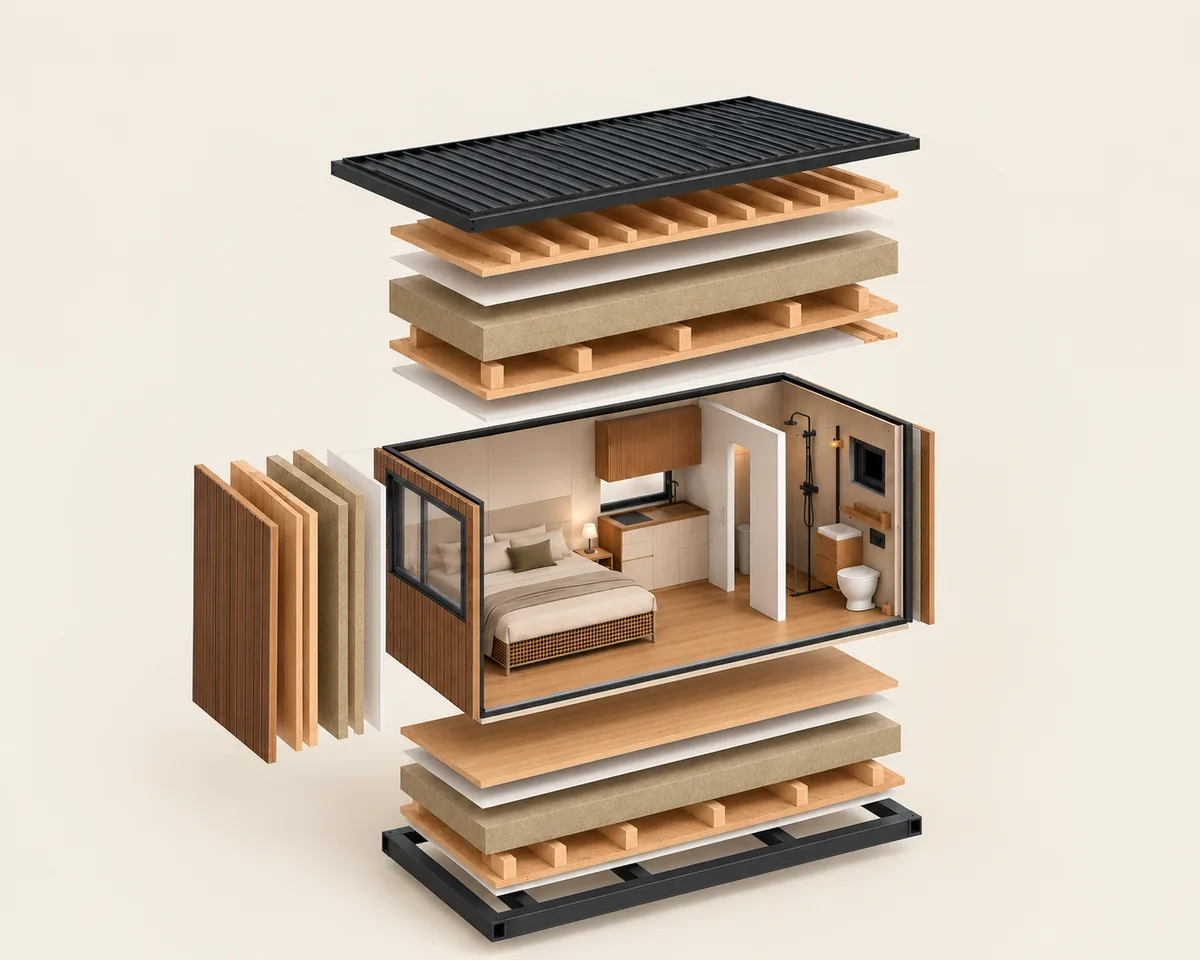
Two modules may look almost identical from the outside but perform very differently when it comes to temperature, noise or moisture.
The construction of the walls, roof and floor, the type and thickness of insulation, how thermal bridges are addressed and the quality of the windows all have a direct impact on indoor comfort.
For example, a timber cabin with thin solid walls won't necessarily provide the same level of insulation as a multi-layer wall system designed for residential use.
Ventilation, airtightness and protection against condensation are equally important.
It's not simply about choosing one material over another, but understanding how the entire construction system performs as a whole.
3. Materials, Finishes and Equipment
The price also depends on what's included in the module.
A basic shell is very different from a fully finished space with interior wall finishes, flooring, windows and doors, lighting, electrical installations, heating and cooling, or a complete bathroom.
Even among fully equipped modules, there can be considerable differences in material quality, window systems, bathroom fittings and other components.
The important thing is to understand what's included as standard, which features are optional and what additional elements or work may be required.
4. Technical Documentation and Regulatory Compliance
One of the less visible, but most important, differences is the technical documentation available for the module.
Depending on the intended use and the specific project, structural calculations, evidence of thermal and acoustic performance, construction product documentation and installation certificates may be required.
In Spain, residential buildings must demonstrate compliance with the applicable technical requirements, including those established by the Technical Building Code (CTE).
A module that looks like a home, or even includes a kitchen and bathroom, does not automatically meet the requirements for residential use.
It's therefore important to ask whether the construction system and materials provide the necessary performance, and what technical documentation the manufacturer can supply to support the project's regulatory compliance.
A higher price doesn't automatically guarantee compliance, just as a lower price doesn't necessarily mean a module is unsuitable.
What matters is having sufficient technical information to assess whether the module is appropriate for its intended use and whether the overall project can meet the applicable requirements.
How to Compare Two Prefabricated Modules
Before making a decision, these are some useful questions to ask any manufacturer:
Intended Use
What purposes has the module been designed for?
Construction System
How are the walls, roof and floor constructed?
Insulation
What level of thermal and acoustic performance does it offer?
Windows
What type of frames and glazing are included?
Equipment and Finishes
What installations, equipment and finishes are included in the price?
Regulations
What technical documentation can the manufacturer provide?
Budget
What is included in the quoted price, and which additional costs should you expect?
Warranties
What warranties are offered, and who is responsible if a problem arises?
It's Not About Choosing the Most Expensive Module
A simple module may be perfectly suitable for certain uses. For others, appropriate insulation, building services and technical performance will be essential.
The best option isn't necessarily the cheapest or the most expensive. It's the one that meets your needs, is suitable for your project's requirements and gives you a clear understanding of what you're buying.
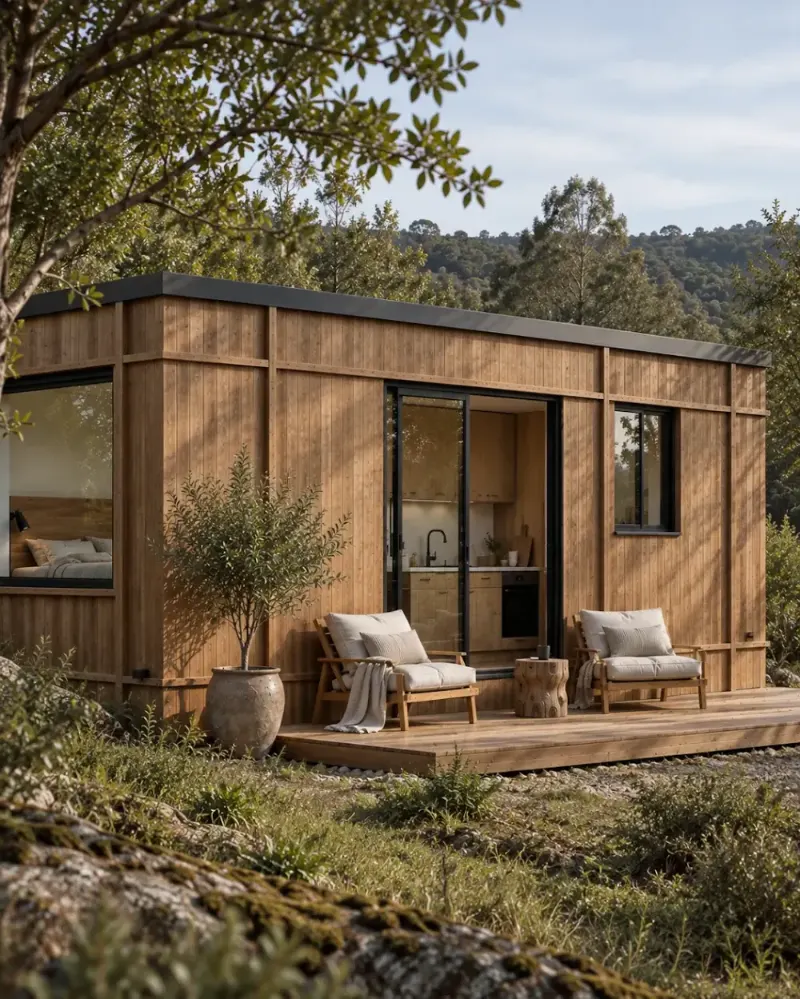
Because two modules can look identical in a photograph and still offer very different things.