How to Expand a Rural Hotel with Modular Guest Rooms
More Rooms, Without Necessarily Closing the Hotel
Imagine you run a small rural hotel with good occupancy rates and unused space in the garden or on an adjoining plot. You would like to add more rooms, but a conventional extension could mean months of construction work, disruption for guests and challenges in keeping the business running.
Prefabricated modular guest rooms offer an interesting alternative: independent units manufactured off-site and delivered to the property for installation.
It's a different way to approach hotel expansion, reducing the amount of construction work required on the property itself.
Why Choose Modular Guest Rooms for a Hotel Extension?
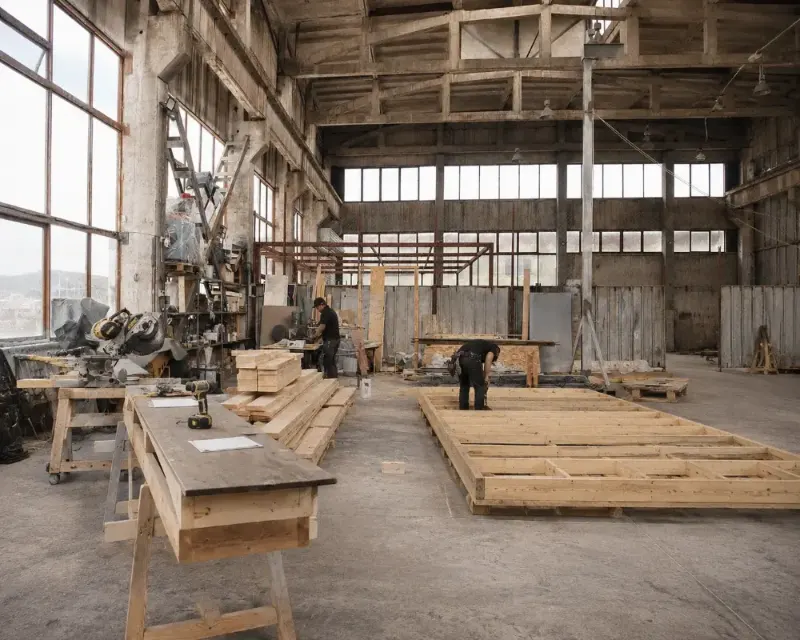
With modular construction, much of the building process takes place away from the property.
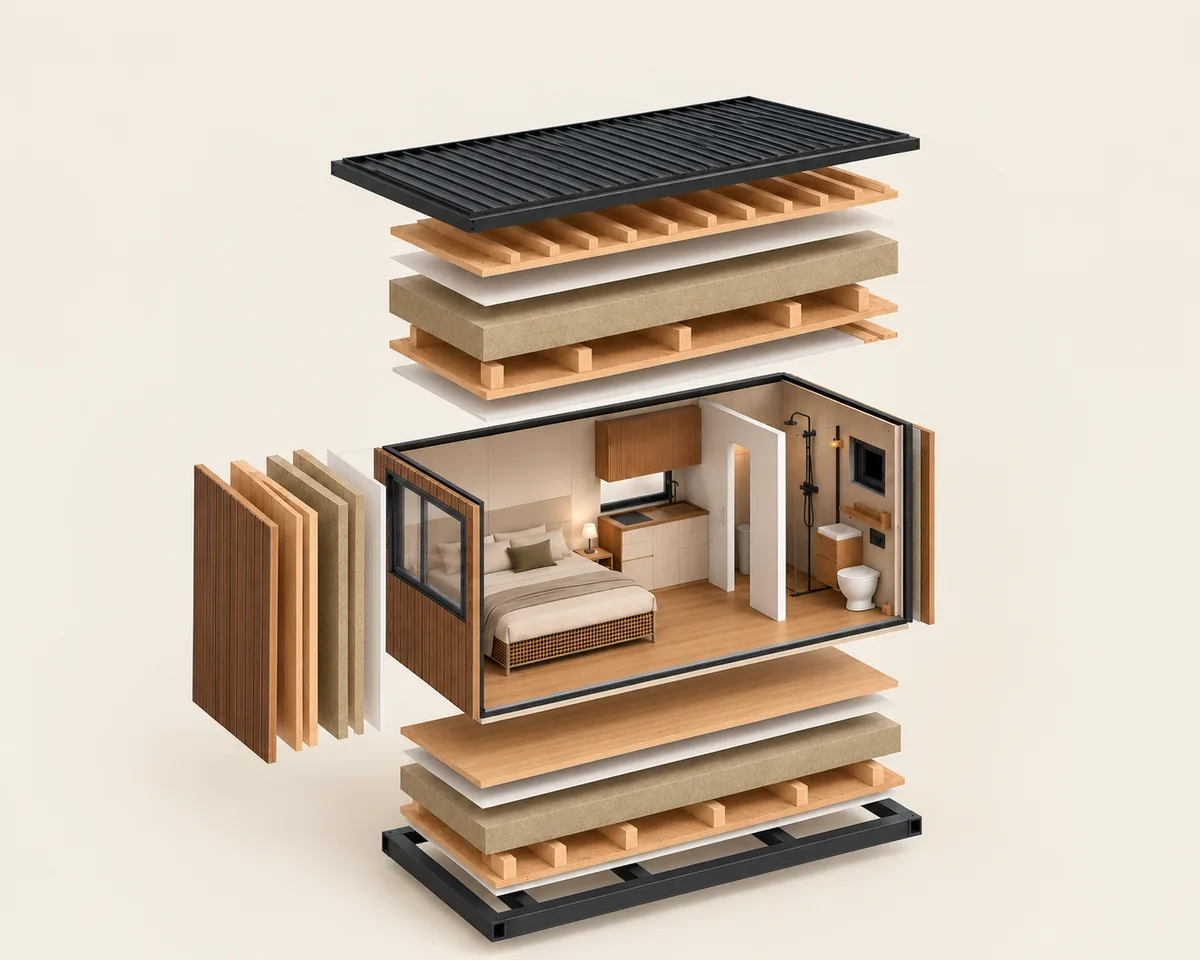
The structure, insulation, windows, installations and interior finishes can be completed in a workshop before the module is transported to its final location.
This allows site preparation and module manufacturing to take place in parallel, provided the necessary planning and permits are in place.
For an operating hotel, the advantages can be significant:
- Less construction work on site: Much of the manufacturing process takes place off-site.
- Reduced disruption for guests: Less construction activity is required close to existing accommodation.
- More predictable planning: Working with pre-designed models makes it easier to coordinate manufacturing, transport and installation.
- Potential for phased expansion: Independent units allow for gradual growth, provided future phases are considered and authorised as part of the project.
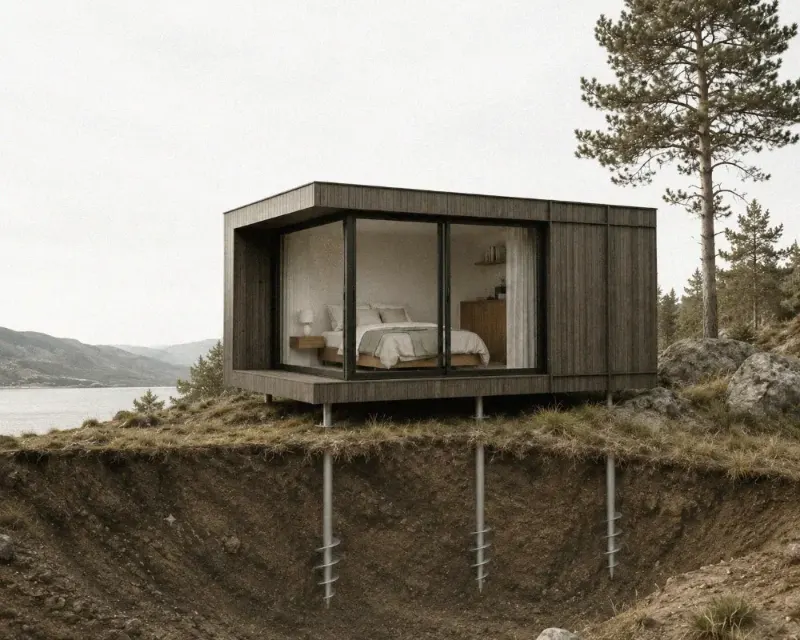
This doesn't mean an extension is entirely free from construction work. Foundations, access, utility connections and installation still require work on site.
Independent Guest Rooms Connected to the Landscape
One of the most interesting possibilities for rural hotels is adding independent guest rooms within gardens or outdoor areas.
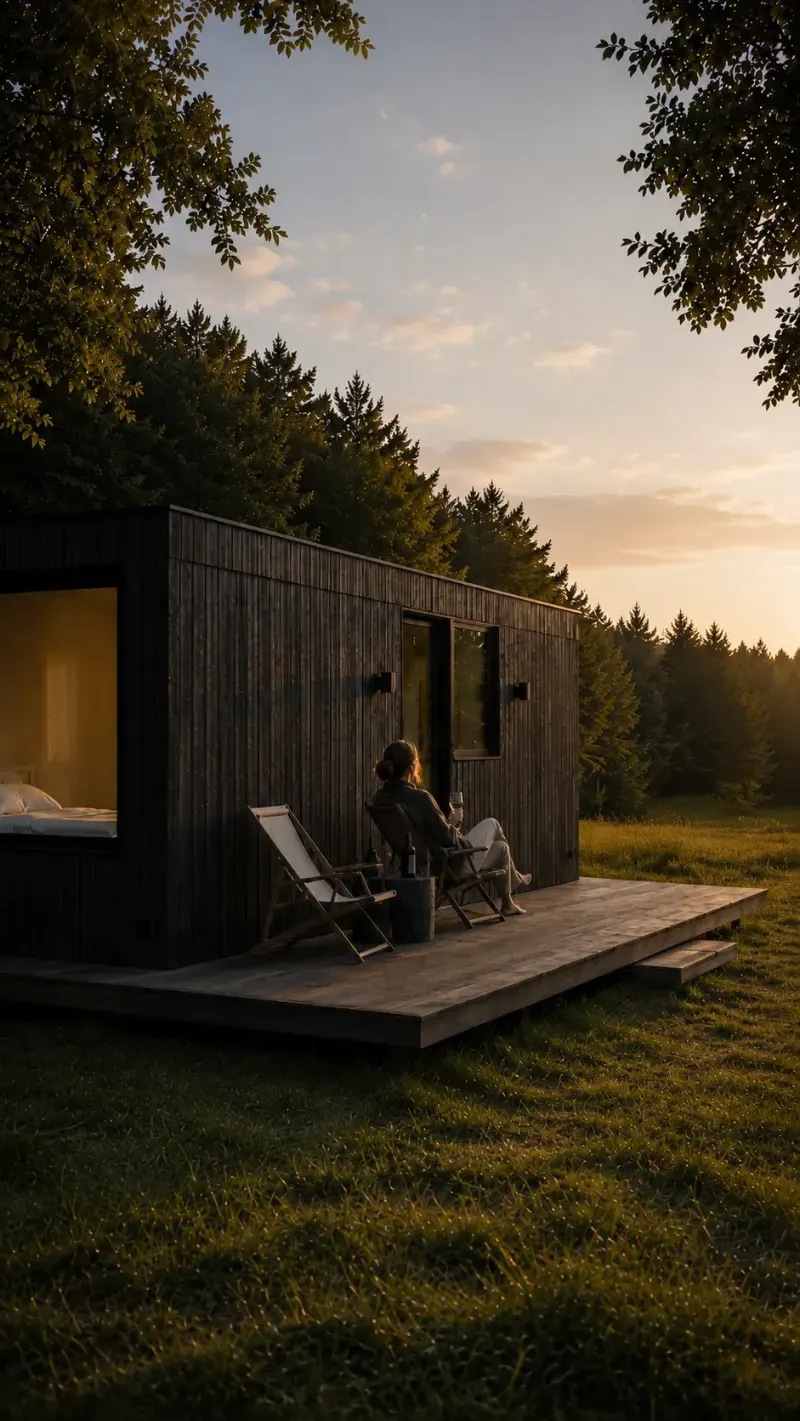
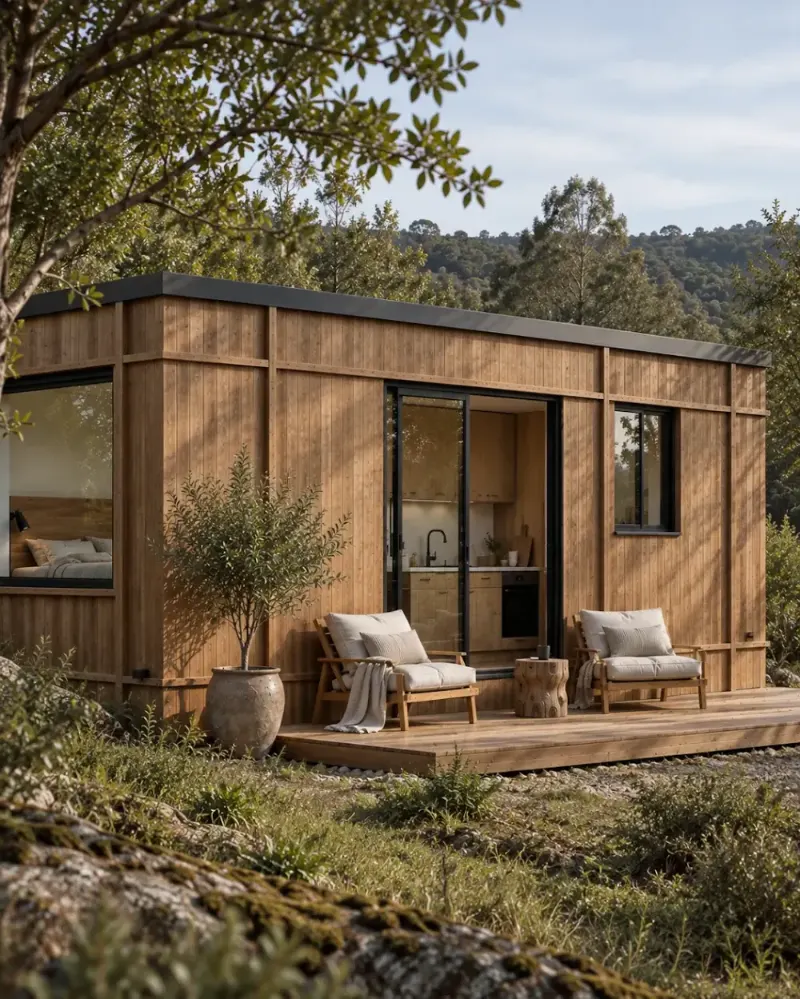
Rather than extending the main building, individual units can be positioned among trees, oriented towards the views or arranged to make the most of different parts of the site.
This approach can offer a different experience from a traditional hotel room: greater independence, more privacy and a closer connection with the landscape.
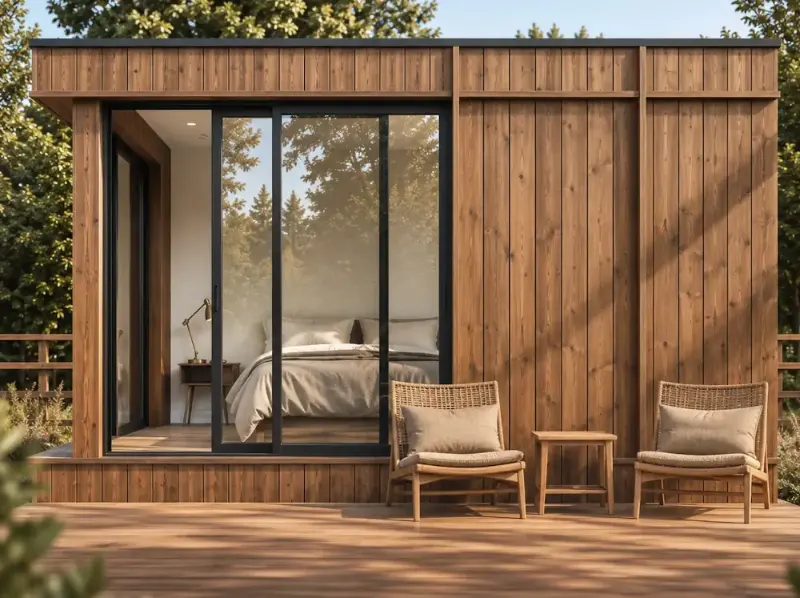
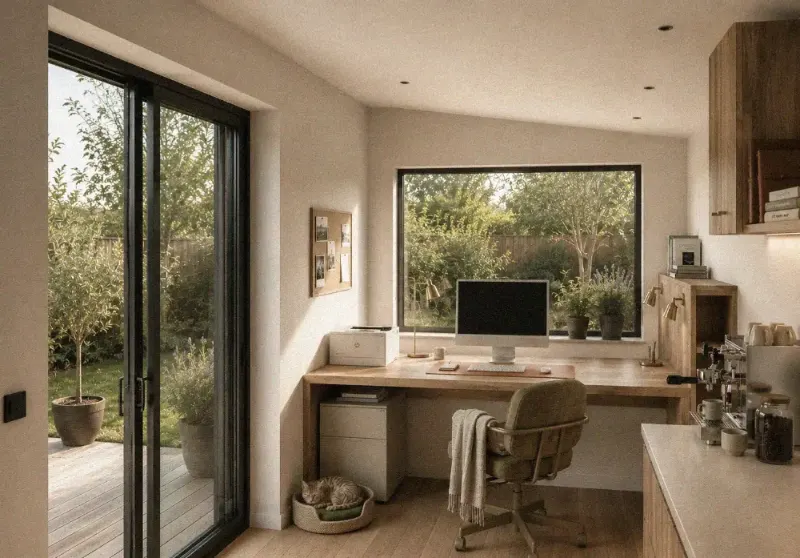
Depending on the accommodation concept, units may include a bedroom and full bathroom, or incorporate a kitchen and small living area for a more self-contained stay.
Capsule, for example, is a module with a bedroom and full bathroom, designed to add rooms to accommodation that is already up and running.
The choice will depend on the services the hotel already offers and the experience you want to create for your guests.
Can the Hotel Remain Open During the Extension?
This is often one of the first questions hotel owners ask.
Off-site manufacturing means much of the construction process takes place without affecting the property. However, whether the hotel can remain open throughout the extension will depend on the specific project.
Access for delivery vehicles, crane positioning, areas that may need to be temporarily closed and utility connections all need to be considered.
It is also worth scheduling the most disruptive work outside peak occupancy periods.
In some cases, normal hotel operations may continue with only occasional interruptions. In others, certain areas may need to be temporarily restricted.
The key is to plan installation around both the construction requirements and the guest experience.
Before Expanding, Check Whether Additional Rooms Are Permitted
Having available land doesn't automatically mean you can build new accommodation units or increase the hotel's guest capacity.
Before choosing the modules, it is essential to assess planning feasibility and the regulations that apply to the property.
This includes checking the available building allowance, permitted uses, building placement requirements and whether the hotel's authorised capacity can be increased.
The project must also address safety, accessibility, utilities and the applicable requirements of the Spanish Building Code (CTE).
Specific conditions may vary depending on the region, municipality and hotel classification.
Manufacturing a room off-site does not exempt it from planning permission or applicable technical requirements.
What Should Be Included in the Budget?
The cost of expanding a hotel goes beyond the price of the modular guest rooms themselves.
Technical studies and design, permits, foundations, transport, crane hire, utility connections and any necessary landscaping or site preparation should all be considered.
It is also important to assess how the additional rooms will affect daily operations, including cleaning, maintenance, staff circulation, supplies and shared facilities.
Before investing, it is worth estimating the additional revenue the new rooms could generate and checking whether the hotel's existing facilities can accommodate more guests.
An Opportunity to Rethink the Guest Experience
Expanding a rural hotel doesn't have to be simply about adding more rooms.
It can also be an opportunity to offer something different: independent accommodation, greater privacy, views of the landscape and a closer connection with the surroundings.
Modular guest rooms make it possible to explore this type of expansion using pre-designed units manufactured in a workshop.
But as with any hospitality project, the starting point should always be the same: understanding what can be developed on the site and what type of accommodation makes sense for the business.
Because growth isn't just about adding more rooms. It's about creating an experience that brings value to both the hotel and its guests.